


This was the first time in my Orthodox Christian life that I had stood before two holy relics. At St. Basil the Great Orthodox Mission in Weatherford, Oklahoma, I venerated a reliquary presented as holding a fragment of the True Cross and another presented as holding a relic of Saint Basil. A priest also blessed me with the cross-shaped reliquary. I did not take that moment lightly.
There are two different things to say about an encounter like this. I can describe what I saw, what the parish told me and what Orthodox tradition teaches. I cannot independently prove the chain of custody for either fragment. That distinction matters, especially when the history reaches back more than sixteen centuries.
What the Fourth-Century Sources Actually Say
Eusebius of Caesarea describes Constantine clearing the site in Jerusalem and ordering a church over the place Christians identified with Christ’s burial and Resurrection. Eusebius does not say that Helena discovered the Cross. That detail belongs to the tradition as it developed in later fourth- and fifth-century accounts.
Orthodox tradition credits Saint Helena with finding three crosses near Golgotha and identifying Christ’s Cross through a miracle. I receive that as the Church’s tradition. Historically, the surviving accounts do not all say the same thing or appear at the same time.
One point is firmer. By the middle of the fourth century, Cyril of Jerusalem could say that pieces of the wood of the Cross had spread throughout the world. Later in that century, the pilgrim Egeria described the wood being brought out for veneration in Jerusalem on Good Friday. Those texts show how early the devotion was. They do not authenticate every fragment claimed in later centuries.
That is the ground I am comfortable standing on: early Christian testimony to the veneration of the Cross, an Orthodox tradition surrounding Saint Helena and an honest limit on what I can verify about the fragment I encountered in Oklahoma.
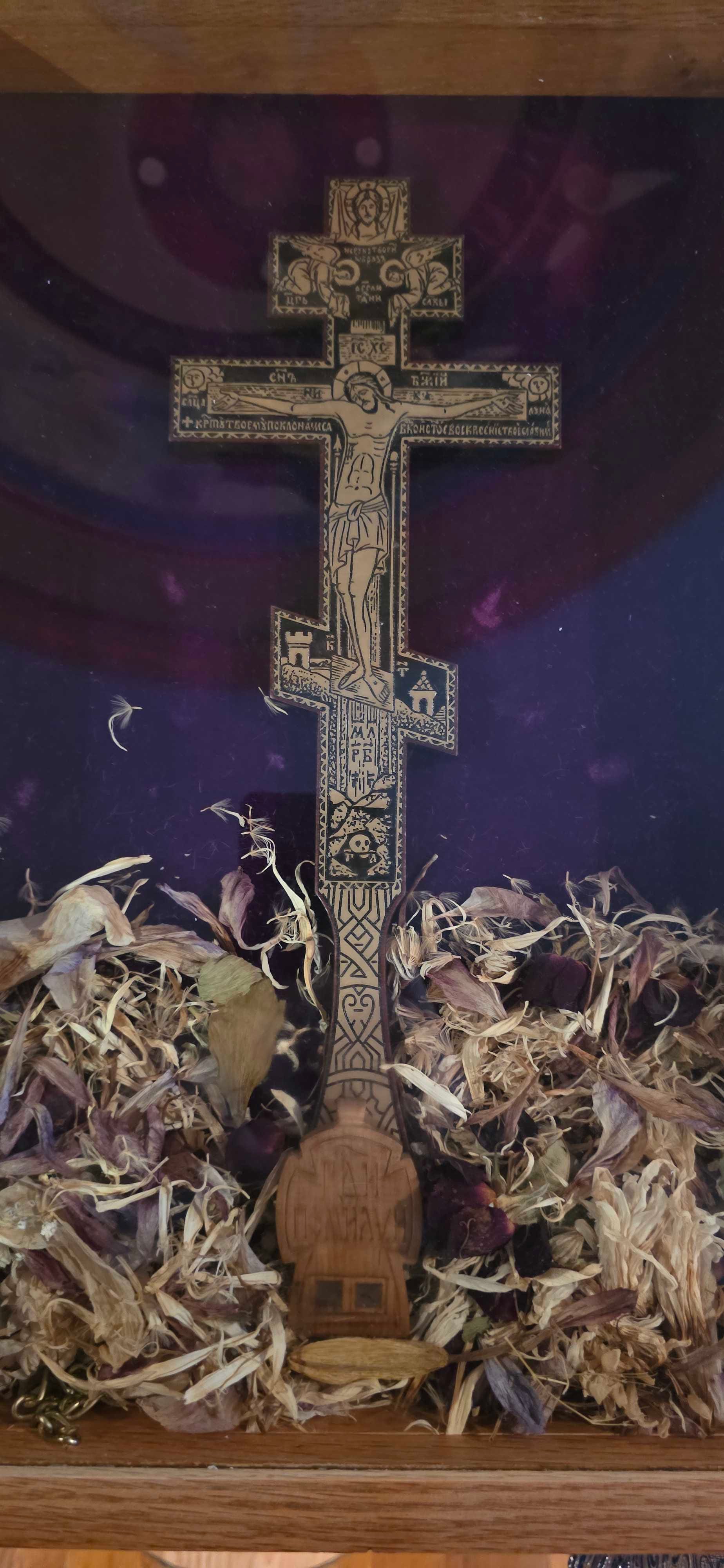
The reliquary presented to me as containing a fragment of the True Cross.
Saint Basil the Great and the Relic I Venerated
Saint Basil the Great reposed on January 1, 379, after serving as bishop of Caesarea and defending the Nicene faith. Gregory of Nazianzus remembered the overwhelming crowd at Basil’s funeral. The Orthodox Church has honored Basil ever since as a hierarch, theologian and pastor.
The Weatherford reliquary was presented to me as containing a relic of Saint Basil. I forgot to ask what part of him it held. I would rather admit that than fill the gap with a confident story that I cannot source.
For me, the importance of the moment was not the size of either fragment. It was the connection between the faith described in old texts and the faith still practiced in a small Orthodox mission in western Oklahoma.
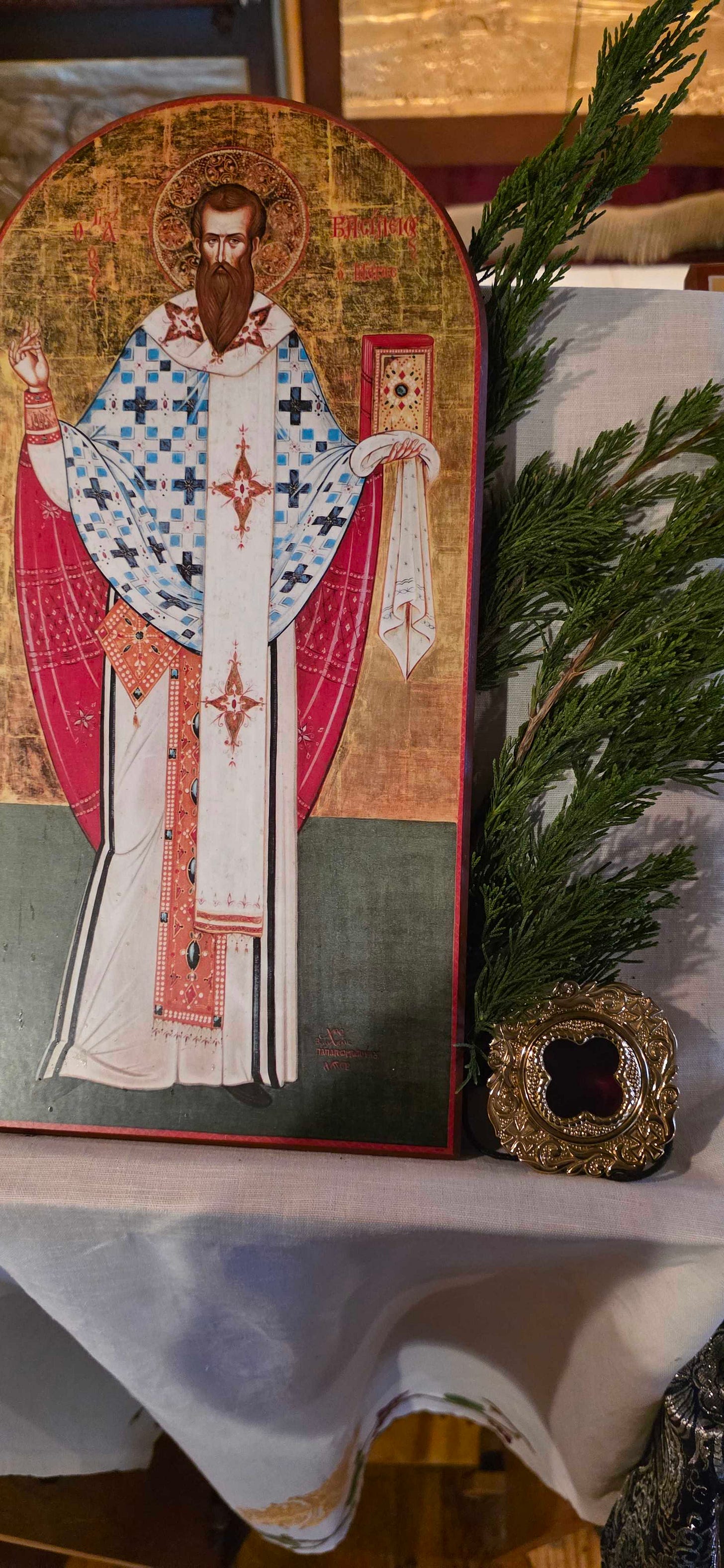
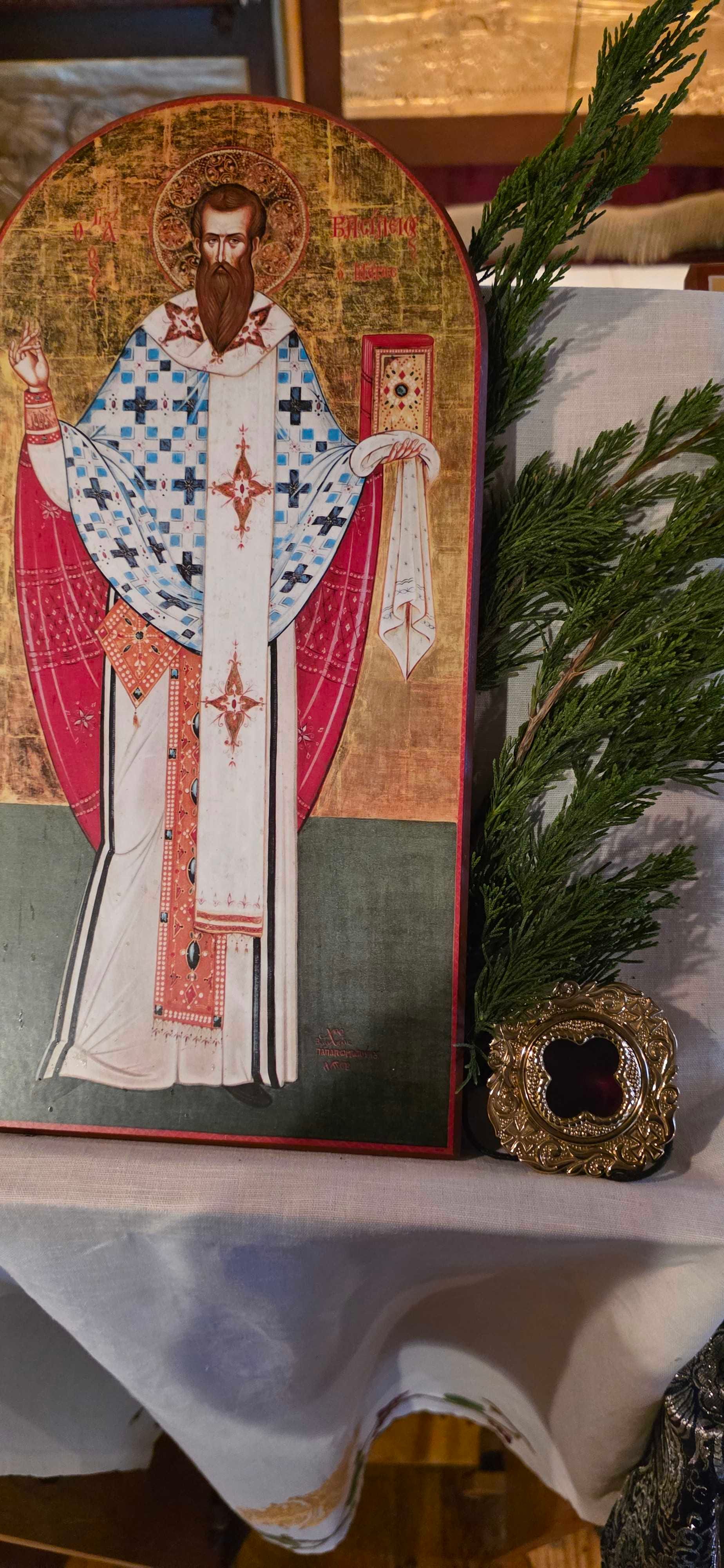
The reliquary presented to me as containing a relic of Saint Basil the Great.
Why Relics Matter in Orthodox Life
Orthodox Christians do not worship wood or bone. Veneration is an act of honor directed through the relic toward Christ and toward the saint whose life was given to Him. The material world is not treated as disposable; it can carry memory, blessing and witness.
Standing in that chapel, I understood the practice less as an argument and more as an encounter. I came away grateful, curious and aware of how much history can be held in a very small object.
What Stayed With Me
Related: Saint Basil the Great — The Bishop Who Would Not Bend
Related: How St. Basil Orthodox Mission Took Root in Weatherford
That was quite an interesting read. Church history is a fascinating topic!