


Menudo has a reputation that walks into the room before the bowl does. People know the tripe. They know the red broth. And they know the old claim that a bowl after a long night will bring you back to life.
That reputation is part of the culture surrounding menudo. It is not medical fact. The National Institute on Alcohol Abuse and Alcoholism says there is no scientifically proven hangover cure other than time. A hot, salty bowl of soup may feel comforting the next morning, but comfort and a cure are not the same thing.
What Is Menudo?
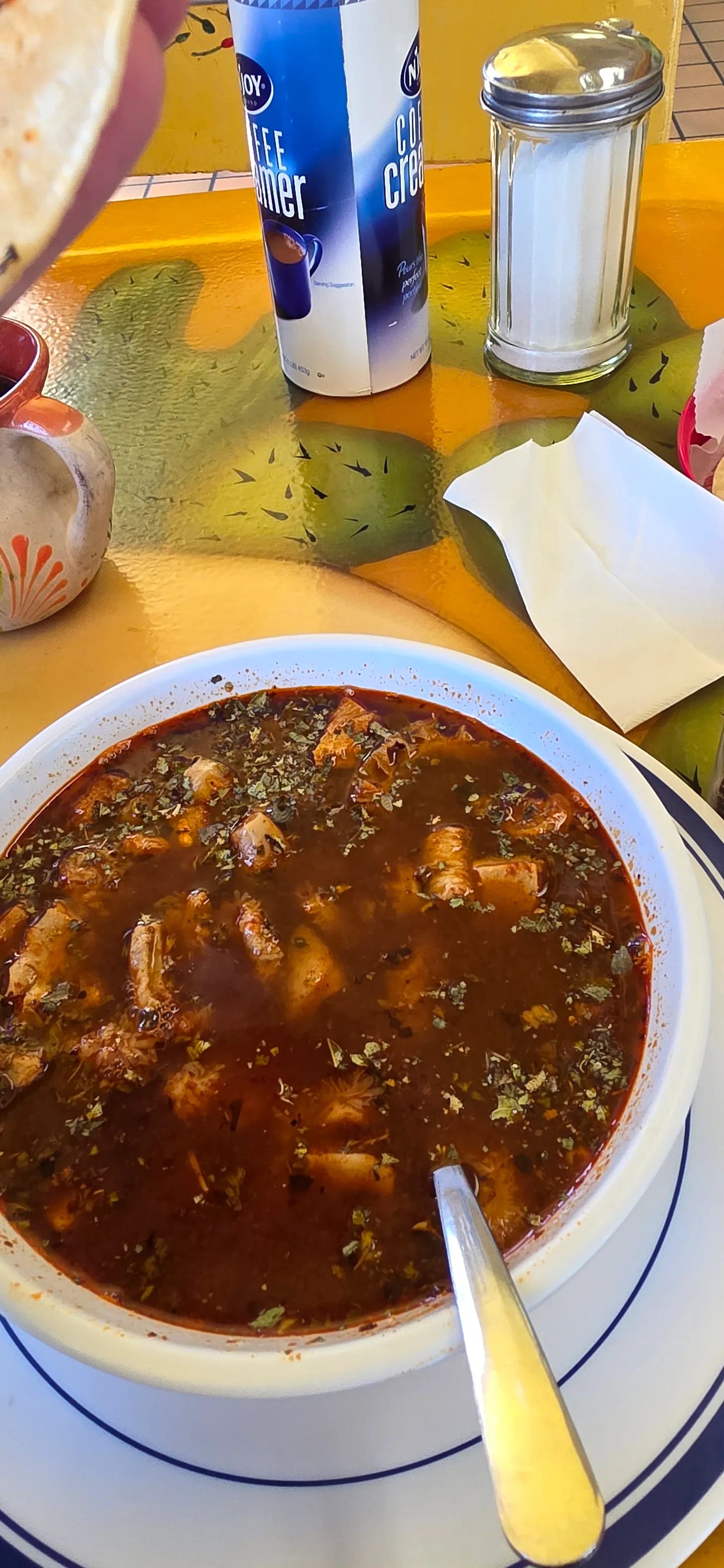
At its simplest, menudo is a slow-cooked Mexican soup built around beef tripe. Menudo rojo gets its deep color and heat from dried red chiles. Menudo blanco leaves those chiles out and lets the broth stay pale. Hominy appears in many versions, but recipes change by region, restaurant and family.
The bowl is only half the experience. Lime, chopped onion, oregano and crushed chile let each person finish it their own way. Corn tortillas or bread belong close by because leaving that broth behind feels wrong.
The work behind menudo is part of its meaning. Tripe has to be cleaned carefully and simmered until it becomes tender. This is not a rushed weeknight soup. It is the kind of food that makes sense in a large pot on a weekend morning, with enough to feed whoever walks through the door.
From Necessity to Tradition
Menudo brings together cattle and offal traditions introduced after Spanish colonization with ingredients rooted in the Americas, including maize and chiles. The exact birthplace is debated, and I am not going to invent a neat origin story where the record does not give us one.
What is clear is that menudo became deeply rooted in Mexican and Mexican-American life. Library of Congress oral-history material from South Texas describes it as a folk food with its own history and folklore. The dish turned an inexpensive, difficult ingredient into something people gather around.
Why It Endured
Menudo endured because it asks for patience and gives back something bold, filling and communal. It can be a Sunday breakfast, a holiday pot or the meal someone swears by after a late night.
I would rather call it a comfort food with a legend attached than sell it as a cure. The legend may get people talking, but the bowl has enough character to stand on its own.
Sources
National Institute on Alcohol Abuse and Alcoholism: Hangovers
Library of Congress: Usable Pasts — Mexican American folk food in South Texas
This sounds amazing!
I needed this when I was younger!